Campus Redevelopment
Phase 1 — Ethridge Hall & camp; 2026 Summer Camp Launch
Our first phase focuses on Ethridge Hall, a non-historically designated building that allows renovation to begin immediately. This structure will serve as the heart of our Summer 2026 Youth Empowerment Camp, providing housing for campers, staff, and volunteers. Ethridge includes 17+ rooms, multiple bathrooms, and an apartment, giving us a flexible layout ideal for youth programming and short-term lodging. The nearby cafeteria will serve as a multifunctional space for meals, workshops, talent shows, and indoor recreation. The adjacent science building — with 8 classrooms and an office — will serve as breakout rooms for STEM labs, leadership classes, mental health workshops, and creative projects. Outdoors, the open grounds beside the parking area will be transformed into activity zones for sports, team-building exercises, and arts programming.
Renovations for Phase 1 include a new roof, minor trades work, and wall repairs. Our goal is to partner with companies like Canfor, leveraging community and corporate support to minimize costs, increase local involvement, and accelerate the launch of
youth programming.
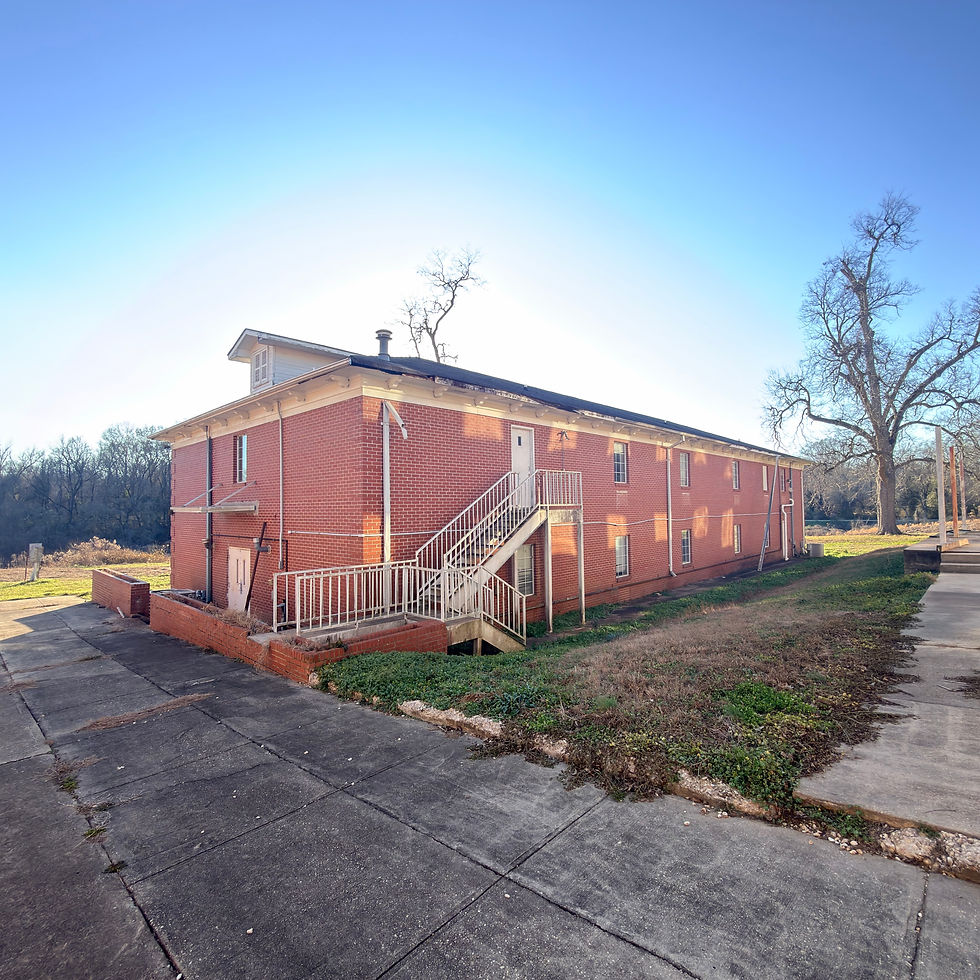
Ethridge Hall
Phase 2 — Administration Building Renewal
The auditorium will be used for plays, film screenings, town halls, and conferences, while the library will serve as a digital learning center and historical archive. Classrooms will host workforce development programs, entrepreneurship incubators, and certification courses in hospitality, media, and technical trades. The theater, once renovated, will support performing arts programs, youth productions, and community events.
The second phase centers on restoring the Administration Building, one of the most
important structures on campus. This 3 story building houses 16 classrooms, 6
administrative offices, an auditorium, theater, and library.
This phase revives the campus original purpose: education, culture, and leadership
development.
Once restored, the building will
serve as the intellectual and cultural heart of the reimagined academy.

Phase 3 - Residential Redevelopment
Phase 3 focuses on modernizing the dormitories and residential housing across the campus, including Guthrie, Redus, Gage, and Kathleen McKenzie Halls, as well as the, and the Jenkins Infirmary residences. Together, these facilities contain up to 83 dorm rooms with a total capacity of ~200 beds, enabling the academy to support large programs, retreats, training cohorts, and community events. These buildings will accommodate students, interns, staff, visiting groups, and long-term career trainees.
By modernizing these units, we can create stable housing for individuals enrolled in trade programs, culinary school training, cosmetology certification, media apprenticeships, or transitional workforce programs. This housing is essential for a sustainable economic engine.


Phase 4 - Grounds Redevelopment, Recreation Expansion

The final phase involves transforming the vast outdoor land into a vibrant, family-friendly
recreation destination. Plans include creating a go-kart track, paintball arenas, mini-golf
course, and obstacle/ropes course. The existing 4 acre lake, trails, and pavilion will be
enhanced to support fishing, boating, hiking, and community gatherings.
These outdoor attractions do more than entertain — they stimulate tourism, create jobs,
provide safe youth engagement spaces, and generate recurring revenue for campus
sustainability. When complete, the grounds will become the regions premier hub for
recreation, fitness, and outdoor education
Campus Sustainability; Long-Term Economic Impact
Once renovations are complete, the revitalized Chamberlain-Hunt American Academy campus will function as a self-sustaining community engine, intentionally designed to generate recurring revenue, support local entrepreneurship, preserve history, and fund continuous youth programming. The goal is not simply to restore a historic site, but to create a living ecosystem that fuels economic mobility, family engagement, and educational innovation for Claiborne County. The renovated dormitories — which collectively provide nearly 200 beds — will be used year-round to house summer campers, visiting student groups, educational retreat participants, sports teams, conference attendees, and job-training cohorts. This flexible lodging model ensures a consistent revenue stream while keeping the campus active during every season. Beyond housing, the campus will also introduce a Business Hub, created by converting available office spaces into affordable, professional environments for small businesses, nonprofits, freelancers, and emerging entrepreneurs. The hub will include private offices, shared conference rooms, a staffed reception area, a mailroom, and a shared break room — offering a turnkey business ecosystem at accessible rates. This approach not only supports the local economy but also provides long-term operating revenue that directly funds campus programs and building maintenance.
To strengthen both sustainability and community engagement, the cafeteria will be reimagined as a fully operational cafeteria/restaurant and coffee bar. This multi-use venue will serve meals to program participants while functioning as a community eatery open to residents and visitors. It will also operate as a hands-on training site for culinary arts students and hospitality jobseekers, providing both workforce development and a steady stream of revenue.
In addition to these economic drivers, the campus will feature a dedicated Historical Artifact Exhibit, showcasing photographs, documents, memorabilia, and preserved architectural details that tell the story of Chamberlain-Hunt Academy’s 147- year legacy. This curated space will serve as a cultural and educational attraction, offering guided tours for school groups, tourists, alumni, historians, and families. The exhibit enhances community pride, draws visitors to Port Gibson, and generates additional revenue through ticketed tours, events, and heritage programming. Together, these initiatives — lodging, business incubation, hospitality services, recreation programming, and historical tourism — create a diversified financial model that ensures long-term stability. This approach minimizes reliance on grants or emergency fundraising and allows the revitalized campus to continually reinvest in youth programming, economic mobility pathways, and the preservation of its historic identity. The result is a vibrant, self-sustaining campus that honors its past while driving Claiborne County’s future.
Want to Donate?
Talk to us!